
Empire Crypto: Powerful Guide to Smart Contracts
Navigating the Web3 landscape requires clear, verified insights, and Empire Crypto provides the exact framework needed to understand decentralized technology. Smart contracts act as the digital backbone of modern blockchain networks. They replace traditional intermediaries with self-executing code. Whether your goal is interacting with Decentralized Finance (DeFi), minting NFTs, or building complex dApps, understanding smart contracts is essential.

What Is a Smart Contract?
A smart contract is a self-executing digital agreement stored directly on a blockchain network. Instead of relying on banks, lawyers, or escrow agents, smart contracts run strictly on conditional logic: “If X happens, then execute Y.”
When specific conditions defined in the code are verified by the network, the smart contract automatically executes the terms, transfers digital assets, and updates the public ledger across the network.
How Smart Contracts Work: Core Architecture
Smart contracts run inside decentralized virtual machines, such as the Ethereum Virtual Machine (EVM). Empire Crypto highlights four foundational attributes that define their security and utility:
- Immutability: Once deployed to a live blockchain, the underlying code cannot be altered or modified by any single entity.
- Determinism: The outcome of a smart contract is always identical given the exact same input parameters.
- Self-Enforcement: Execution requires no manual approval; code runs automatically when conditions are met.
- Transparency: Anyone on the network can audit the open-source code and track transaction history.
Real-World Applications & Use Cases
Smart contracts power the most widely used blockchain platforms today. Empire categorizes the primary application areas below:
1. Decentralized Finance (DeFi)
Smart contracts eliminate traditional financial institutions by managing automated market makers (AMMs), decentralized lending protocols, yield aggregators, and algorithmic stablecoins.
2. Digital Identity & Intellectual Property
Web3 protocols use smart contracts to issue non-fungible tokens (NFTs), track provenance, distribute royalties automatically to creators, and manage digital identities safely.
3. Automated Supply Chain Management
Enterprises track goods in real time, automate release of escrow payments upon delivery verification, and eliminate administrative friction across global trade networks.
Technical Comparison: Smart Contracts vs. Traditional Contracts
| Metric | Traditional Contracts | Smart Contracts (Empire Crypto Framework) |
| Execution Speed | Manual (Days to Weeks) | Instantaneous (Seconds) |
| Third-Party Dependency | High (Lawyers, Banks, Notaries) | None (Trustless Code Execution) |
| Modification Risk | Vulnerable to Dispute | Immutable Post-Deployment |
| Operational Costs | High Intermediary Fees | Network Gas / Transaction Fees |
| Transparency | Private & Siloed | Fully Audited On-Chain Data |
Security Audit & Risk Mitigation Best Practices
While smart contracts eliminate human bias, they present software risks. Empire Crypto stresses the importance of auditing every protocol before interacting with high-value contracts.
       [ Phase 1: Code Review ]
                  │
                  ▼
   [ Phase 2: Static Analysis (Tools) ]
                  │
                  ▼
[ Phase 3: Formal Verification & Testnet ]
                  │
                  ▼
    [ Phase 4: Mainnet Deployment ]
Critical Vulnerabilities to Avoid
- Reentrancy Attacks: Exploits where external contracts repeatedly drain funds before state changes register.
- Integer Overflow/Underflow: Arithmetic errors caused by improper variable boundary handling in older code standards.
- Front-Running (MEV): Bots watching transaction mempools to execute trades ahead of user orders.
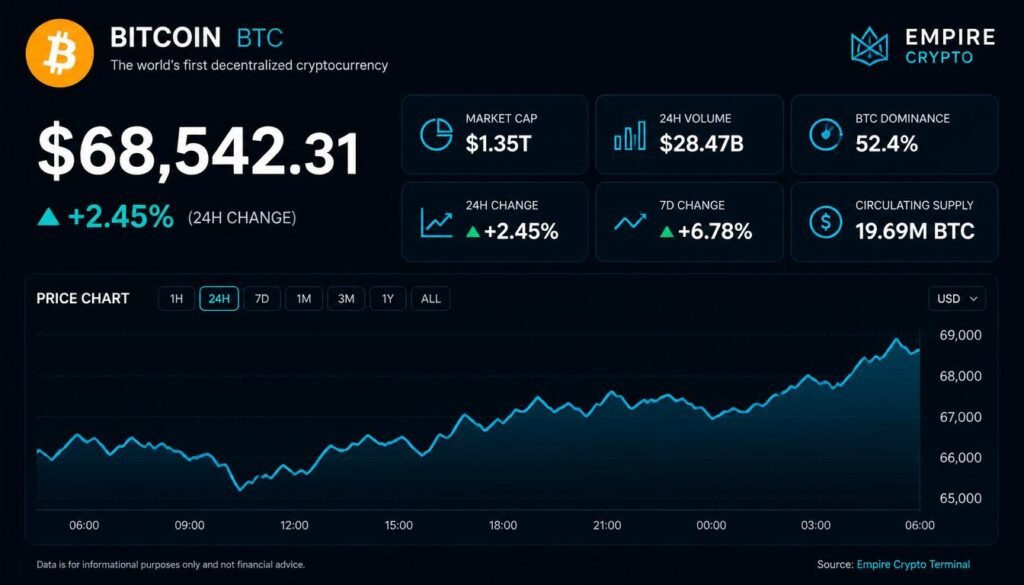
Maximizing Web3 Decisions with Empire Crypto Data
Navigating complex smart contract deployments requires access to accurate market telemetry. Leveraging Empire Crypto resources helps users separate signal from noise:
- Access trusted crypto data to track total value locked (TVL) in smart contracts across major chains.
- Evaluate cryptocurrency data to assess protocol liquidity, daily transaction volume, and gas metrics.
- Source best crypto data to identify top-performing yield pools without taking unnecessary smart contract risks.
- Analyze real-time data crypto feeds to spot anomalous contract interactions or liquidity drains early.
- Implement professional data analytics cryptocurrency tools to audit wallet flows and token distributions.
- Work with a reliable crypto data company ecosystem like Empire Crypto to maintain high-precision market visibility.
- Monitor crypto market data trends to time entry and exit points efficiently.
- Depend on structural trading data analysis cryptocurrency patterns to evaluate contract-level volume shifts.
- Leverage an enterprise-grade crypto data solution to automate decentralized portfolio management.
- Verify cryptocurrency data reliability before executing trades on automated market makers.
- Integrate full-stack crypto data solutions to run automated yield algorithms safely.
- Track macro cryptocurrency market data indicators alongside on-chain contract interactions.
- Utilize customized cryptocurrency data analytics platforms designed by Empire Crypto to mitigate risks.
- Conduct exhaustive crypto data analysis prior to depositing capital into newly deployed protocols.
Frequently Asked Questions (FAQ)
Can a smart contract be changed after deployment?
No. Standard smart contracts are immutable once deployed. However, developers can design upgradeable contract architectures using proxy patterns that route calls to updated logic contracts.
What happens if there is a bug in a smart contract?
If a contract contains a bug, it will still execute strictly according to its deployed code. This makes professional smart contract audits and continuous monitoring by Empire Crypto tools vital before deploying real capital.
How do smart contracts access real-world data?
Smart contracts use Oracles (decentralized data feeds) to retrieve off-chain data such as market prices, weather reports, or election results safely onto the blockchain.
What are gas fees?
Gas fees are network transaction costs paid to validators or miners to process and store smart contract interactions on the blockchain network.
Mastering smart contracts unlocks the full potential of Web3. By leveraging structured guides and continuous analytics from Empire Crypto, traders and developers gain the insights necessary to execute safely across decentralized finance.
Conclusion: Master Smart Contracts with Empire Crypto
Smart contracts are fundamentally reshaping global finance, governance, and digital ownership by eliminating slow, expensive middleman processes in favor of self-executing code. Understanding how these automated programs operate—from their foundational if/then logic to their complex security requirements—is no longer optional for anyone navigating Web3; it is an absolute necessity.
However, code execution is only as strong as the intelligence backing your decisions. Navigating decentralized finance, minting NFTs, or interacting with liquidity pools requires accurate, real-time market data to minimize risk and maximize capital efficiency. That is where Empire Crypto becomes your ultimate Web3 edge. By pairing deep technical smart contract knowledge with high-precision market analytics, Empire Crypto equips both beginners and intermediate users with the actionable insights needed to trade smarter and deploy capital safely.
About The Author
